

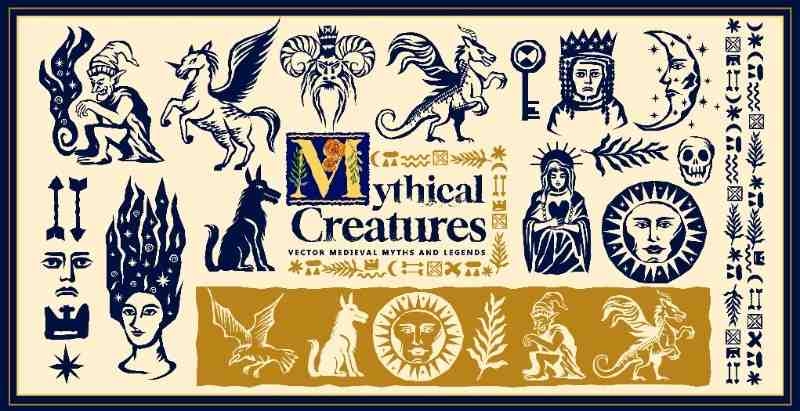
Mythical beasts have captured our imagination since the dawn of history. The stories, legends, and traditions surrounding these creatures have shaped human culture for thousands of years. The fierce creatures of Greece, for example, and the awesome beasts from Norse mythology show us what we can learn about the culture and values of those ancient peoples. Finding a truly good list of mythical creatures, whether classified by category, location, or time period, is an opportunity to relive the incredible history of the world's ancient peoples and to inspire creativity in creating both modern stories and art.
Fascination with mythological creatures has existed for centuries; they’re found in ancient literature and art, including depictions of Greek and other monsters, reflecting the cultural belief systems of their time.
Many elements found in today's society are represented by these types of legendary creatures. Dragons, phoenixes, and many other mythical creatures from people around the world form an extensive list of legendary creatures found in their myths and folklore.
Legendary or mythical creatures have represented power through their moralistic behavior; they are eventually perceived as myths because they were once "real" to society. They serve as a bridge between the known & unknown, providing us with both mystery and curiosity about their meanings/influence in our lives through the storytelling of their legends.
Some of the most widespread myths concern well-known beings from a wide variety of famous legends, such as terrifying Greek monsters, amazing Norse creatures, and mythical creatures inspired by traditions around the world.
These folklore creatures have endured for generations in stories and represent cultural values, natural forces, and feelings shared across many cultures over time.
Greek mythology features many striking and critical creatures. Three of the more commonly known Greek monsters are:
These gods and goddesses embody many characteristics similar to our own struggles with pride, fear, and punishment. Drawing on these examples, Greek myths have used figures to convey particular lessons and, in doing so, have created legendary stories
Norse mythology features many powerful beasts who represent the fates of men and the battles between the cosmos. Three of the more notable Norse beasts are:
Not only are these legendary Norse beasts important to the mythology of the Norse gods, but they also offer a perspective on life through the themes of destiny and perseverance. Furthermore, the legends of the Norse explain the repetitive nature of destruction and renewal. In this way, the mythical creatures of Norse mythology have philosophical significance.
Legendary creatures are widespread and known globally. Famed legendary creatures from different cultures are:
These mythical creatures will always be the inspiration for many forms of modern storytelling/movies/games throughout time. Their universality appeals to us through their representation of hope.
Animals from mythology can represent a culture's or belief system as a symbol of that society's values, fears, or spiritual beliefs. Many ancient folklore creatures originated in nature, religion, and historical events; as a result, they are attributed with great power because they represent how people expressed their understanding of the world around them.
Throughout various traditions, mythological creatures, such as Greek monsters and Norse beasts, often convey moral lessons, natural power, or the balance of the cosmos. This list of mythical/legendary creatures illustrates how different cultures have used storytelling to convey their identity, imagination, and common human experience.
Society's values and elements of nature are represented in the folktales of mythical creatures. For instance, in Asia,
These mythical animals did not just spontaneously emerge; they represent a connection to the environment and cultural beliefs of the people who have shared these myths with one another.
Mythical creatures can be found in modern society in movies and video games, with many popular franchises using Greek and Norse monsters to create fully immersive worlds and experiences. Writers and developers often use a list of legendary creatures when telling a story, ensuring that these ancient myths remain part of our vernacular while being reimagined for a contemporary audience.
Mythical animals also continue to be an important aspect of today's society because they:
These ancient folklore animals are a testament to humanity's collective imagination and storytelling traditions throughout time.
A broad-ranging approach to researching mythological creatures makes the topic far more interesting. In this case, it is possible to compile a diverse list of mythological creatures, including Greek and Norse monsters and rare mythical beasts from other cultures.
Studying these ancient folklore creatures and determining their origins and the symbolism associated with them, you will develop an appreciation for creativity and enrich your understanding of their meanings.
Research different cultures and include Greek monsters, Norse beasts, and lesser-known mythical animals. Researching different cultures will help build an appreciation for the diversity of mythological creatures.
Whether you write or create visual designs, using mythology in your creative projects will provide you with endless opportunities to be creative. A solid list of legendary creatures will significantly enhance both storytelling and world-building.
Learn More: Explore Chinese Mythology: A Guide to Legends and Myths
Mythical beings are not solely fantasy; they provide a snapshot of society, an insight into the imagination, and a glimpse into one’s belief system(s). From the mighty monsters of Greek mythology to the enigmatic beasts of Norse tradition, the stories surrounding these creatures both inspire and educate.
A well-researched list of different forms of mythical creatures reminds us of the diversity of global traditions. Many examples of mythical creatures in world folklore can be found throughout time, reminding us that stories filled with awe and intrigue have endured through generations.
There are three major reasons for differences in how cultures interpret nature, fear, and spirituality: factors such as the environment, religion (or spirituality), & historical events help shape the imagery of mythical animals and their associated folklore. Therefore, cross-cultural comparisons of mythical animals yield differing lists of legendary creatures with unique symbolic meanings and varied storytelling styles.
Many mythical animals are derived from real animals; however, the stories told about them enhance & amplify their traits. When there were unknown phenomena, ancient people merged identifiable traits of known species to create new types of mythical animals, such as dragons & griffins, which can be found on a long list of legendary creatures throughout the world in various ancient folktales.
Greek monsters & the characteristics they represent are based on punishment/morality, and Norse beasts represent karma and a justice/balanced universe; therefore, the Greek monster is conceptually differentiated by being concentrated more specifically on human weakness, and the Norse beast is conceptually reminiscent of a number of concepts, including the determination of fate, human strength(s), and no way to change what happens except for events to happen in a certain sequence as depicted in all folklore about ancient cultures.
The answer lies in their unrivaled creativity, which enhances narratives through mystery and symbolism while maintaining a sense of wonder about the story being told. Many contemporary forms of media continue to draw on mythical beasts/animals as they create imaginative worlds, allowing modern audiences to connect with ancient creatures and characters from classic myths/legends.
The short answer is YES! Studying mythical beasts/animals introduces you to various ideas and symbols that will inspire innovation through storytelling, artistic expression, and originality because these creatures are linked to many different ways people have created stories over the centuries. Therefore, these types of creatures should be considered an important source of inspiration for writers/designers/creators in creating their products (books, films, paintings).
This content was created by AI